What is ICM?


Carbon Capture and Storage (CCS)
CCS involves the separation of carbon dioxide (CO₂) at the source, such as power and cement plants, followed by its permanent storage in deep geological formations, preventing emissions from entering the atmosphere.


Direct Air Carbon Capture and Storage (DACCS)
DACCS involves the separation of carbon dioxide (CO₂) directly from the ambient air followed by its permanent storage in deep geological formations, preventing emissions from re-entering the atmosphere. Like BioCCS, this can help deliver permanent carbon removals.


Bio-Carbon Capture and Storage (BioCCS)
BioCCS involves largely the same processes as CCS ,with the distinction being that the carbon dioxide (CO₂) originates from biogenic sources, like plants. When biomass is managed sustainably, BioCCS can deliver net-negative emissions by removing CO₂ from the atmosphere.


Carbon Capture and Utilisation (CCU)
CCU involves the separation of carbon dioxide (CO₂) and its reuse to produce materials, fuels, or chemicals. CCU can only be compatible with net zero when the CO₂ is stored permanently in products.

Carbon Capture and Storage (CCS)
CCS involves the separation of carbon dioxide (CO₂) at the source, such as power and cement plants, followed by its permanent storage in deep geological formations, preventing emissions from entering the atmosphere.
Direct Air Carbon Capture and Storage (DACCS)
DACCS involves the separation of carbon dioxide (CO₂) directly from the ambient air followed by its permanent storage in deep geological formations, preventing emissions from re-entering the atmosphere. Like BioCCS, this can help deliver permanent carbon removals.
Bio-Carbon Capture and Storage (BioCCS)
BioCCS involves largely the same processes as CCS ,with the distinction being that the carbon dioxide (CO₂) originates from biogenic sources, like plants. When biomass is managed sustainably, BioCCS can deliver net-negative emissions by removing CO₂ from the atmosphere.
Carbon Capture and Utilisation (CCU)
CCU involves the separation of carbon dioxide (CO₂) and its reuse to produce materials, fuels, or chemicals. CCU can only be compatible with net zero when the CO₂ is stored permanently in products.
How does it work ?
The history of ICM

Carl von Linde
Carl von Linde develops industrial gas separation, laying early foundations for separating CO₂.
First patents
The first patents for CO₂ separation technologies are issued.
First large-scale CO₂ injection
The first large-scale CO₂ injection takes place at SACROC in Texas, demonstrating the feasibility of underground injection.
Cesare Marchetti
Italian physicist Cesare Marchetti proposes capturing carbon dioxide from industrial sources and storing it permanently to address the greenhouse gas effect.
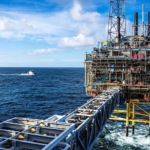
Sleipner begins operation
The Sleipner project begins operation in the North Sea, becoming the first CCS project designed specifically to mitigate climate change.

Carbon Management Europe
Founded as the Zero Emissions Platform (ZEP) with the support of the European Commission, Carbon Management Europe is established to unite stakeholders and accelerate CCS deployment in Europe.

CCS Directive
The European Union adopts the CCS Directive, establishing a legal framework for geological CO₂ storage.

Paris Agreement
The Paris Agreement is adopted, setting a global pathway towards net-zero emissions.

European Green Deal
The European Green Deal defines the EU’s objective of climate neutrality.

European Climate Law
The European Climate Law makes the EU’s climate-neutrality objective legally binding.
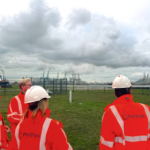
Porthos moves into delivery
Porthos, a major CO₂ transport and storage project in the European Union, moves into delivery.
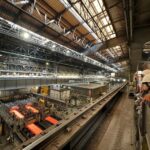
Industrial Carbon Management Strategy
The European Commission adopts the Industrial Carbon Management Strategy, outlining a framework to scale CO₂ capture, transport, storage, utilisation and removals across Europe.
EU policy's impact on industrial carbon management
Establishing the policy framework
EU legislation defines how industrial carbon management is regulated, governed, and accounted for. It shapes how projects can move from planning to delivery.
Providing funding and investment support
EU programmes and financial instruments help de-risk early projects and infrastructure, enabling ICM solutions to scale beyond pilots and into wider deployment.
Enabling safe deployment across Europe
EU-level coordination supports consistent standards and cross-border alignment so industrial carbon management projects can operate safely, reliably, and at scale.