The Industrial Accelerator Act (IAA) is expected to become a key piece of legislation for European industrial decarbonisation.
Yet many projects in sectors such as steel, cement and chemicals remain stalled before Final Investment Decision due to uncertain revenues and weak demand for low-carbon products.
At this Parliamentary breakfast hosted by MEP Sara Matthieu (Greens), policymakers, industry representatives and civil society will discuss the European Commission’s proposal for the Industrial Accelerator Act and its role in strengthening demand for European low-carbon industrial products.
The discussion will tackle the following questions:
- Closing the implementation gaps: What is missing from today’s policy toolbox, and what practical solutions would most effectively support low-carbon products and projects?
- Creating demand and lead markets: Which demand-side measures should the Industrial Accelerator Act include to accelerate industrial decarbonisation? Will public sector measures be enough? What role should the private sector’s demand play?
- Enabling investment in decarbonisation projects: How can the IAA reduce risk and improve bankability for decarbonisation projects, particularly in sectors such as cement and steel, so they can reach FID?
Speakers
 MEP Sara Matthieu
Greens/EFA, European Parliament
MEP Sara Matthieu
Greens/EFA, European Parliament
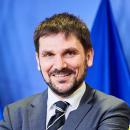 Joan Canton
Head of Unit DG GROW I1, European Commission
Joan Canton
Head of Unit DG GROW I1, European Commission
 Jonathan Cutuli
Senior Manager EU Public Affairs, Heidelberg Materials
Jonathan Cutuli
Senior Manager EU Public Affairs, Heidelberg Materials
 Agnes Borg
Head of EU Affairs, SSAB
Agnes Borg
Head of EU Affairs, SSAB
 Irene Dominguez
Policy Manager, Bellona Europa
Irene Dominguez
Policy Manager, Bellona Europa
 Cristiana Foglia
Policy Officer, Carbon Management Europe
Cristiana Foglia
Policy Officer, Carbon Management Europe
Partners
Frequently asked questions
Does Carbon Management Europe develop or operate industrial carbon management projects?
No. Carbon Management Europe does not develop, own or operate projects. Its role is to support enabling policy frameworks, knowledge sharing and coordination to facilitate the deployment of industrial carbon management across Europe
How do Carbon Management Europe members’ views inform Carbon Management Europe’s positions?
Carbon Management Europe’s positions and outputs are developed through structured governance processes and expert working groups involving its members.
Members collectively discuss priorities, assess evidence, and contribute to draft outputs within Carbon Management Europe’s working groups and governance bodies. The five constituencies – energy companies, industrial companies, civil society organisations, academic and research organisations, and technology, infrastructure and finance – ensure that Carbon Management Europe’s outputs reflect a balanced, evidence-based consensus across the value chain.
Carbon Management Europe does not endorse or represent the individual positions of its members. All publications, policy contributions, and recommendations are jointly developed and agreed upon through Carbon Management Europe’s governance framework. Differing views are addressed transparently, potential conflicts of interest are managed through clear procedures, and all outputs are grounded in technical rigour and alignment with the European Union’s climate objectives.